WELCOME TO THE ARCHIVES

This site contains the archives of my travel blogs from 2010-2016.

I'm now blogging via Medium. For other life updates, including opportunities or requests to collaborate, visit my personal website.

.

.

.

Friday, July 17, 2009

More than a Giant Crevice

0 comments

Why do you believe so many Americans have loaded themselves and their families up in cars to stare out at the Grand Canyon?

The Grand Canyon is a fantastic place. It's awe-inspiring, you can't help but doubt your eyes. I remember writing about it the night we got back; I was still dumbstruck.


I think that going to the Grand Canyon symbolizes the "American road trip" experience. Having a place like this is an excuse for parents to force the entire family into a moving, enclosed bubble where they will spend several hours together. Everyone will pretend they hate it, but in reality the family will treasure this time together forever.


People take their kids back to the Canyon because they want to share the experience with their kids. It's great fun to see the excitement build on the faces of the people around you. All the way up until the very edge of the canyon, you can't even tell it's coming. You're just driving along, and then all the sudden there's an enormous hole in front of you. No camera can capture the vastness of this canyon. It stretches for as far as you can see. I've never been more genuinely shocked by a landscape.


But it's not just about seeing a nice view,
it's about the whole process....singing along to the one sole radio station in the middle of the Arizona desert, stopping for cheeseburgers or pizza at some freeway town, inventing games to pass the time, fighting in the car, getting hopelessly lost and finally making it to the destination. It's about community.


This Land is My Land

0 comments

Read Whitman's "I Hear America Singing." Identify a song that has held some meaning for you or for the group over the trip and reflect on how it's important to America and/or the road trip.

I've always loved America's patriotic songs and hymns. I can remember finding my dad's old boy scout handbooks from his childhood, rummaging through them, and being thrilled to find a whole section in the back about our National Anthem and other songs. I memorized the words to most of them, learned to play them on piano, flute -- whatever musical instrument I could get my hands on, and sung them all the time. It made me feel like I was part of something special, part of a big, friendly group of people who called themselves Americans.

One that kept coming back to me during the trip is Woody Guthrie's "This Land is Your Land..."

This land is your land This land is my land
From California to the New York island;
From the red wood forest to the Gulf Stream waters
This land was made for you and Me.


As I was walking that ribbon of highway,
I saw above me that endless skyway:
I saw below me that golden valley:
This land was made for you and me.

I've roamed and rambled and I followed my footsteps
To the sparkling sands of her diamond deserts;
And all around me a voice was sounding:
This land was made for you and me.

This land is your land This land is my land
From California to the New York island;
From the red wood forest to the Gulf Stream waters
This land was made for you and Me.


Arriving at the Statue of Liberty, I started thinking about everything that lies between that Redwood forest and the New York Island I was now standing on. Having journeyed from one end of the country to the other, taking in what lies between, has enabled me to have a new sense of ownership of our country. I've seen the diamond deserts, the ribbons of highway, the gulf stream waters, the golden valleys, and much, much more. I've shared meals with people all over the country, and no matter what our political or religious views, I was able to find common ground with almost everyone in breaking bread together.

I'm glad that my experiences here -- the goodness of so many Americans and the infinite beauty of America's landscapes -- have made me want to take ownership. It would have been a sad story if I went out and discovered that America really wasn't everything I had built it up to be. No, on the grand scale of everything, I didn't really discover anything new -- America is just what I thought it would be.

And that's great news. :)

Thursday, July 16, 2009

Coming Home and Looking Back

1 comments

Last night, driving home from Belmont to my summer abode in Franklin, I was overcome with a mixture of feelings. I felt energized, introspective, complacent, nostalgic, and hopeful, all at the same time.

It was strangely wonderful to be alone, a privilege I haven't had during the past 40 days. Every mile marker on the freeway brought a new wave of flash-backs, unforgettable moments in different cities along the way. Everything happened so fast during the trip -- it seems like it was all a blur. But even in those 20 minutes it took to get home, as I silently let down the retaining wall that held back a flood of mental notes, I began to see splotches of the big picture come into focus.


Tuesday, July 14, 2009

The Infamous Food Blog

0 comments

Bonnie's Prompt:
In painstaking detail, recall a meal that has taught you something about America.


One of the first blogs I ever wrote was a food blog. I had arrived in Bruxelles at 7am on a Saturday morning. On the way home from the airport, Philippe (my host dad) pulled over and Michelle (my host mom) hopped out. At this point I had been awake for 35+ hours and understood none of the French they were so rapidly exchanging.

15 confusing minutes later, Michelle arrived at the house on foot with a bag full of a variety of bread rolls as well as several baguettes. Everyone received a planche (a personal mini cutting board) and a knife, and started each preparing a breakfast for himself -- at the table. The rolls were piled in giant bowl in the middle of the dining room table, jams and spreads galore were brought out, and it was kind of like a free-for-all.

The biggest surprise was Nutella. Chocolate frosting for breakfast? I watched in disbelief as my host brother smothered a little roll with several tablespoons of the choco-hazelnutty goodness.

That meal was a great introduction to Belgian culture. Ever since then, whenever I see exchange students, I think about what they would describe as a "typical American meal." It really could be almost anything. We are a conglomeration of so many different cultures--a typical meal varies a lot from one home to another.

For this blog, I'm going to describe my favorite meal (and one that I enjoyed often during this trip).....

mmmmm....FroYo
After this mouthwatering shot, you probably don't need me to describe in "painstaking detail." I'll just say that it was absolutely delicious.

One of the reasons why I was first attracted to the idea of frozen yogurt is it's healthy reputation. It's like eating ice cream, only it's been dubbed "better-for-you" and

It's pretty easy to go through life in America without eating anything that's full fat or full sugar. We like to eat, but we also want to be skinny. We tend to focus on quantity instead of quality of taste or nutritious quality, and thus we're always coming up with new ways to eat more without consuming more calories.

And while most of us could do well to cut back on fat and sugar, we should be replacing it with leafy greens--not extra processed, genetically modified "healthy versions" of fat and sugar.

And while froyo is what got me going on this rant, it's not froyo that I'm concerned about. REAL froyo--with 12 different types of natural bacteria--is really good for you.
Good enough to make a meal out of it :)


Monday, July 13, 2009

Day 38 - Charleston, South Carolina

0 comments
I know that I declare practically every day to be my "favorite day so far," but I really think that Charleston needs to be counted among those favorites. I woke up groggy, a bit disoriented, and skeptical about the 80% humidity, but listening to Paul Simon's "Rhythm of the Saints" album on the way to our first stop helped me wake up and smell the roses.
Once we arrived at Drayton Hall I knew it was going to be a great day. I'm tempted to say that I love learning about architecture, and I did today, but it would be misleading to say that I'm an architecture enthusiast. I really just love learning about anything that's at hand, anything that I can touch, feel, listen to, or experience for myself. And I especially love learning about things like this from people who are either experts on the subject or obviously very passionate about it.

The kind, gentle, elderly woman who led us about the plantation this morning was more than passionate about it; I could tell that it meant everything to her. Seeing her pride in recounting the stories and revealing all the little quirks about the two-and-a-half-centuries old home and its occupants was very touching. Her stories swept me back in time and made walking through the beautifully preserved three-story brick building an incredible experience. As I climbed the right side of the symmetrical grand staircases in the front room, I could almost feel the swish of a colonial-style sweeping gown brush my legs. I gazed upon a piece of the tile that once adorned the outside of one of the upstairs fireplaces and could practically see the servants stoking the fire, adding another log every so often. I felt the winds of a great hurricane as our guide demonstrated how the storm shutters worked. I smelled fresh-baked bread and soup simmering in giant kettles as we walked past the 15'x8'x3' oven in the above-ground basement.

The other night, as a friend and I were comparing our different experiences in Williamsburg, he started talking about the "prescence" of the place. I think it's something that is easier felt than described, but I've witnessed this intangible, often peaceful prescence in a few different places during this trip. It's a reminder of the past, a reminder that the world is so much bigger than I often perceive it to be. And it's awe-inspiring, something that continuously reminds me not to take life for granted -- especially these precious 40 days that are devoted to pure discovery.

Among these inspiring locales:
  • the Lincoln Monument
  • the Grand Canyon
  • the cemetary at Wounded Knee
  • the Library of Congress
  • the Eastern Oregon/Nevada desert
  • Breendonk Concentration Camp (Belgium)
  • the courthouse in which Abraham Lincoln practiced as a Circuit Court Judge before being elected President (moved from Springfield, IL to the Henry Ford Museum)
  • the Old State House in Boston, where the Declaration of Independence was read publicly for the first time
  • the church in Williamsburg at which George Washington worshipped regularly, and where the colonists prayed and meditated for a day after hearing about the Boston Tea Party. At the end of the day they returned to the capitol building and voted unanimously to revolt and fight for their independence.
  • and, the Drayton Hall Plantation.
To say that these places are peaceful doesn't mean that they always were. Some of them once witnessed immense human suffering -- I'm thinking particularly of Breendonk Concentration Camp and the old plantations of the South. But there's something to be said for making peace with a place.

This leads me to two quite interesting experiences from earlier this afternoon.

  1. Pierce's parents generously bought our lunch at a delicious restaurant in Charleston called Gullah Cuisine. The Gullah culture originates primarily in Sierra de Leone, Africa, and evolved with the people who were brought here as slaves.*** A friendly Gullah woman, Kesha, who runs the restaurant spent an hour or so with us this afternoon, giving some interesting insights into the Gullah culture that I was so unfamiliar with. One of Kesha's stories was about a cousin who was recently married on a plantation. "I don't like to talk about plantations, I just don't like to talk about them," she said. So she was at first upset that her cousin was getting married there, but eventually "got over it." Some of the older family members didn't let it go so easily..."Did she forget she's dark-skinned!" they raged.

  2. After leaving the restaurant we headed downtown to a farmers market of sorts, complete with jewelry, Christmas ornaments, touristy t-shirts, fake leather bags, Chinese do-it-yourself acupuncture-simulating vibrating massagers, matted paintings, homemade candy, and hand-woven baskets for sale. After having learned about the traditional Gullah style of basket weaving during lunch, I quickly noticed the numerous basket weavers selling their wares around the perimeters of the market.

    As we walked up the street from our van, approaching the market, I couldn't help but comment on how the open-air indoor market was set up in three large barn-like buildings with no doors, lined up consecutively and positioned in a way that conveys their important role in the community. They were markedly different -- in color, size, and style -- from the buildings on either side of the street and I turned to Dr. Spring, looking for some explanation. You can imagine how my jaw dropped as he told me that these buildings were built to be a market: a slave market. A place where one man would come to inspect others--just as I was there to inspect the wares--and perhaps barter, finally setting on a "fair price." It's hard for me to imagine putting a price on a human life.

    There were so many questions I wanted to ask the merchants there; about half of them black and half white. I wanted to ask, "How does it feel to sell your products here, in the same building that your ancestors were once sold as product? How do you deal with that reality? Is this something that crosses your mind every day as you set up shop? What have you done or what conclusions have you come to that have allowed you to make peace with this place--at least enough to be able to work here yourself?" I wanted to ask all this and more; a million questions were running through my head. But I was too scared. I was scared that I would offend someone. I was scared of what answers I might get. I was scared that someone would occuse me of not being politically correct.

    But those are horrible excuses and I regret not having had the nerve to approach a vendor. Ignoring the situation--walking through there and pretending like nothing had ever happened, pretending that I wasn't uncomfortable--is what perpetuates this "touchy subject" and prevents an important dialogue from taking place. How are Americans supposed to come to terms with their history if discussing some events is taboo? Am I the only one who feels the tension in the room when slavery is addressed?
I want to come back to this notion of making peace with a place. Kesha made peace with the plantation. The Gullah seem to have made peace with the slave markets. And while I was at Fort Breendonk, formerly Breendonk Concentration Camp, I heard that several Jewish people journey to concentration camps to remember the past and then make their own peace.

I haven't really come to any conclusion on this yet: it's just an interesting concept, one that's new to me since I've been blessed with a life involving little to no hardship and no devastating injustices against me. And thus another day throughout which I'm reminded to count my many blessings.


***Gullah dishes are derived from the products that slaves (and later, poor freed African-Americans) were able to obtain; I would describe it as a mixture between the famous Creole food from New Orleans--gumbo/jambalaya/rice dishes, etc.--and Soul Food--corn bread/mac'n'cheese/green veggie stews (collard greens perhaps?). (If these are really poor descriptions, I apologize. I've only had one Creole meal and one Soul Food meal, so my sample size is unacceptably small.)


Saturday, July 11, 2009

Americans and Our Celebrities

1 comments

America is known throughout the world for its celebrities. Besides having a large and powerful military, we are famous for super-sizing everything and for unofficially electing a few individuals to be rich and admired by the majority of the rest. And the world tends to follow suit. Sure, each country has it's 2 or 3 acclaimed superstars, but I can assure you that many American celebrities are just as famous in other countries as they are here.

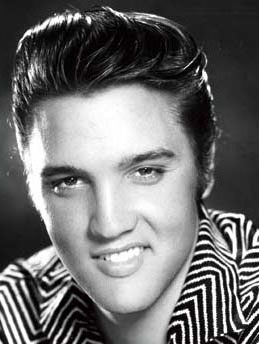
Visiting Graceland was quite the experience. Audio tours are available in what seemed like over a dozen languages, and I forget the exact number, but each year a ridiculous amount of people (mostly foreigners) come to be married at Graceland. It's pretty, but it's not that pretty.

More so than anywhere else I've been, celebrities play an integral role in social life for a large part of the American population. It's especially evident when someone in the public eye suddenly passes away, i.e. Michael Jackson, Billy Mays, Steve McNair. I haven't seen such media coverage on an individual death (MJ) since Princess Diana was killed in 1997.


Having recently left Graceland, I found myself wondering if Neverland would become a similar tourist attraction. Taking the Neverland Tour isn't an activity I would seek out, but having known very, very little about Elvis, I still enjoyed seeing touring his estate. Perhaps it was the outrageous 70's decor that caught my eye.

I heard a few comments about how 'disgusting' the Graceland experience was -- how it exploited the artist's legacy and intruded on his family's privacy. But the whole thing was run privately, and I think Elvis' family would appreciate the reverence with which so many devoted fans approached the King's former abode and present grave (located on the grounds, alongside his parents and other family members).

And with the 600,000+ visitors that come to Graceland each year -- at 26 bucks a pop -- Graceland fuels the Memphis economy, bringing in over $1.5 million revenue to local businesses each year. According to the official Graceland website, Graceland is one of the five most visited home tours in America, and the second most famous home in America, after the White House.

I have a theory about why the celebrity situation in America is the way it is:

Clause 1) America attracts dreamers, people who have a vision for their future that differs from the typical

Clause 2) Americans admire individuality, perhaps more so than any country I’ve been to, and reward individuals for standing out from the crowd by (for example) buying their albums, tickets to their concerts, merchandise, etc.

Clause 3) The American economy is one of only a few that can support a celebrity community—the general standard of living is such that we can afford to care about what they’re doing. We can afford to pay extravagant amounts of money on concert tickets and other celebrity paraphernelia.

I know this is rather shortsighted--there's a lot more that goes into it. But this is a start.

Thursday, July 09, 2009

Shepard Fairey: A Powerful Dissident

5 comments


In “The Declaration of Independence,” Jefferson wrote about citizens’ duty to dissent—in speech but also in action: “…Whenever any form of government becomes destructive of these ends, it is the right of the people to alter or to abolish it, and to institute new government, laying its foundation on such principles and organizing its powers in such form, as to them shall seem most likely to effect their safety and happiness.” Write about a time on this trip you have noticed dissent as a powerful force in American life.
This prompt has been weighing on me for a while now. I feel that mere complaints are too often mistaken for dissent, and I wanted to find an example of what I think is intelligent dissent—not just the regurgitation of a vague, generalized, partisan opinion which requires little to no understanding of the issue at hand. I'm interested in specific, creative, alternative ideas as a response to what the dissenter views as flawed.


I found an example of the powerful dissent I was looking for in a location and medium I least expected. When I think of dissent I think of speeches, books, and articles. I think of two opponents in a verbal duel. I do not think of framed pieces in the Boston Institute of Contemporary Art. When I hear 'dissent' I do not think of murals on brick buildings in poor neighborhoods, bumper stickers, or reinventing propaganda. But then Shepard Fairey came along and my perspective on dissent was quickly challenged.


Even though the picture I would paint of America would differ from his, I appreciate the beauty and straightforward style in which Fairey communicates through his art. It is obvious that a lot of thought goes into his work; each word and each square inch of his pieces are intentionally symbolic.


In this re-creation of the One Dollar Bill, Fairey implies that the American people are pawns, forced to participate in an unethical capitalistic system, and subject to a government who's ultimate goal is to take over the world by way of a 'new world order.' By making this a 'ransom note,' Fairey challenges viewers to consider who/what really owns them.


I see elements of truth here: I think there are quite a few Americans who walk around uninformed and ignorant to the political, economical, and social systems that they subscribe to. But they're not victims. They will only fall prey to 'lesser gods' if they allow themselves to.


In the left circle you see a hand (adorned with dollar sign) reaching for the world. Around it is enscribed 'Hostile Takeover. New World Order.' Earlier this week, during the G8 Summit, Obama supported giving the U.N. more power. Perhaps Fairey is on to something; I wouldn't discount the possibility of the U.N. ruling the world some day. And the scary part is that some people think it's a great idea.


Across the bottom we see written, 'Indiscriminate Capitalism.' A group of us were sitting in the back of the bus when I started to work on this article, and I put this phrase up for discussion: What does Fairey mean by 'Indiscrimate Capitalism'? The consensus was that it's supposed to convey the absence of ethics in capitalism -- that the capitalistic system pays no regard to its effect on the environment, other people, etc.


"But wait a second," I'm thinking, "capitalism was never meant to be an ethical authority." That's what religion is for. I'm all for ethics, but if capitalism involved the dictation of ethics then it would cease to be capitalism -- it would become something like socialism or communism, where everything is "fair" (i.e. everyone gets the same thing no matter how much or how little they work.)


There's something beautiful about reaping the rewards of work in conjunction with productivity. And I'm all for sharing the wealth, but I want to share my wealth on my own terms and using my own discretion.


Mr. Fairey has the right to be frustrated if the people/businesses around him are not living up to his moral expectations, and I understand that his work reflects that frustration. But I wonder about how most viewers interpret this phrase. I see a common trend: Americans blame the government for some businesses' low ethical standards and feel that the way to fix it is for the government to enforce some kind of rule about how and where businesses acquire their products, manufacture their products, market their products, and distribute their products. When really, it's not the government's job to supervise any of that -- each company must set their own ethical standards and moral aspirations; and in turn, each customer must set their own. I hope viewers realize that "Indiscriminate Capitalism" doesn't reflect any failure on the part of our government; it should make them reflect on our decisions as individuals--as individual consumers and individual merchants.


I like that Fairey goes for shock value and is clear but not exhaustive in his message. He leaves a lot up for interpretation, forcing the viewer to think through what they see.


To read more about Shepard Fairey, click here.
Blog content © 2015 Shirah Eden Foy. Powered by Blogger.